

Acting
Luise Rainer
Born: 1910-01-12
Birthplace: Düsseldorf, Germany
Biography
Luise Rainer (/ˈraɪnər/; January 12, 1910 – December 30, 2014) was a German-American film actress. She was the first actor to win more than one Academy Award; at the time of her death she was the longest-lived Oscar recipient.
Her training began in Germany from the age of 16 by leading stage director Max Reinhardt. After a few years, she became recognized as a "distinguished Berlin stage actress", acting with Reinhardt's Vienna theater ensemble. Critics "raved" about her stage and film acting quality, leading MGM to sign her to a three-year contract and bring her to Hollywood in 1935. A number of filmmakers anticipated she might become another Greta Garbo, MGM's leading female star.
Her first American role was in the film Escapade (1935), which was soon followed with a relatively small part in the musical biopic The Great Ziegfeld (1936). Despite her limited appearances in the film, she "so impressed audiences" that she won the Oscar for Best Actress. For her dramatic telephone scene in the film, she was later dubbed "the Viennese teardrop". In her next role, producer Irving Thalberg was convinced, despite the studio's disagreement, that she could play the part of a poor uncomely Chinese farm wife in The Good Earth, based on Pearl Buck's novel about hardship in China. The subdued character she played was such a dramatic contrast to her previous, vivacious character, that she won another Academy Award, even with Greta Garbo as one of the nominees.
However, she would later remark that by winning two consecutive Oscars, "nothing worse could have happened to me," as audience expectations from then on would be too high to fulfill. She was then given parts in a string of unimportant movies, leading MGM and Rainer to become disappointed, and she ended her brief three-year career in films, soon returning to Europe. Adding to her rapid decline, some feel, was the "poor career advice" given her by then husband, playwright Clifford Odets, along with the unexpected death, at age 37, of her producer, Irving Thalberg, whom she greatly admired. Some film historians consider her the "most extreme case of an Oscar victim in Hollywood mythology". She currently lives in London.
Description above from the Wikipedia article Luise Rainer, licensed under CC-BY-SA, full list of contributors on Wikipedia
Movies & TV Credits
 The Love BoatTv · Dorothy Fielding
 The Ed Sullivan ShowTv · Self
 Combat!Tv · Countess De Roy
 BrisantTv · Self
 The OscarsTv · Self
 Boulevard BioTv · Self
 SuspenseTv ·
 Lux Video TheatreTv · Mrs. Page
 Schlitz Playhouse of StarsTv · Chambermaid
 MGM: When the Lion RoarsTv ·
 Film Emigration from Nazi GermanyTv · Self
 The Chevrolet Tele-TheatreTv ·
 That's Entertainment! IIIMovie · (archive footage) (uncredited)
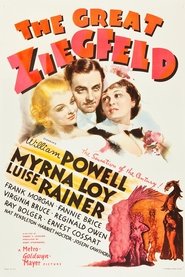 The Great ZiegfeldMovie · Anna Held
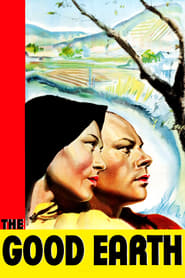 The Good EarthMovie · O-Lan
 Happy 100th Birthday, HollywoodMovie · SElf
 Cavalcade of the Academy AwardsMovie · Self (archive footage)
 Frank Capra's American DreamMovie · Self (archive footage)
 Yellowface: Asian Whitewashing and Racism in HollywoodMovie · (archive footage)
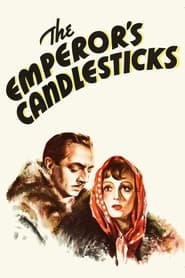 The Emperor's CandlesticksMovie · Countess Olga Mironova
 The Romance of CelluloidMovie · Self (archive footage)
 The Great WaltzMovie · Poldi Vogelhuber
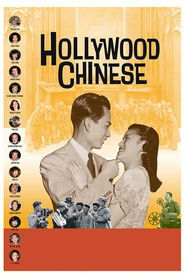 Hollywood ChineseMovie · Self
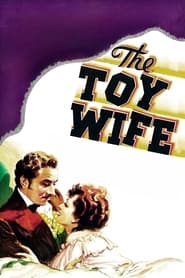 The Toy WifeMovie · Gilberte 'Frou Frou' Brigard
